
Transitioning from the Australian Defence Force is a significant life change, and having a clear plan in place can make all the difference. It’s important to review your financial position, including changes to income, superannuation, and benefits, while creating a budget that reflects your new lifestyle. Taking the time to understand your DVA entitlements and available support services can also help ease the transition.
As former military professionals, the team at Instructant Financial understands firsthand the challenges of leaving service. We combine lived experience with financial expertise to guide you through each step, from structuring your finances and managing entitlements to planning for long-term stability and growth. With the right advice and support, you can transition with confidence and set yourself up for success in civilian life.
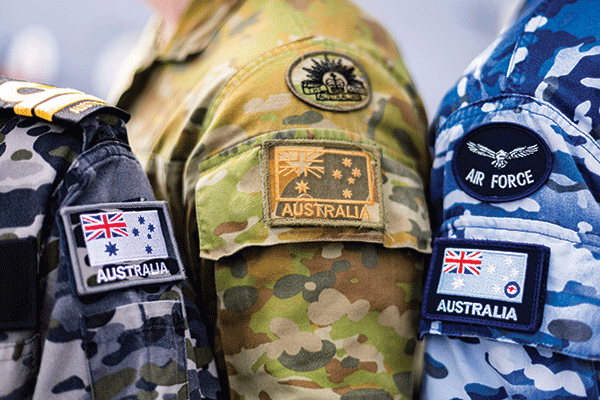
Transitioning out of the Australian Defence Force (ADF) comes with several challenges, both personal and professional. Here are some of the main difficulties that ex-service members often face:
Translating Military Skills – Many veterans struggle to articulate how their military experience applies to civilian jobs. Employers may not understand military terminology or roles.
Finding the Right Job – Defence personnel often have highly specialized skills that may not have a direct civilian equivalent, requiring retraining or upskilling.
Job Stability & Security – The ADF provides a structured and stable career path. Many veterans find the unpredictability of civilian employment challenging.
Mental Health Challenges – Veterans may experience PTSD, anxiety, or depression, particularly if they were exposed to combat or high-stress environments.
Adjustment to Civilian Life – The structure and discipline of military life are very different from the flexibility of civilian society, which can be disorienting.
Loss of Purpose & Identity – The military provides a strong sense of purpose, belonging, and camaraderie. Leaving can lead to feelings of isolation or a loss of direction.
Mental Health Challenges – Veterans may experience PTSD, anxiety, or depression, particularly if they were exposed to combat or high-stress environments.
Adjustment to Civilian Life – The structure and discipline of military life are very different from the flexibility of civilian society, which can be disorienting.
Financial Adjustments – Military pay, allowances, and benefits (such as subsidized housing and medical care) may be lost upon discharge, requiring financial planning.
Housing & Relocation – Many ADF members live in Defence housing. Transitioning out means finding new accommodation, which can be stressful.
Loss of Military Community – The close-knit support system of the ADF is difficult to replicate in civilian life, leading to loneliness or social withdrawal.
Family Adjustments – Spouses and children must also adapt to new routines, locations, and potential financial changes.
Accessing Veteran Services – While there are programs like DVA (Department of Veterans’ Affairs) and Open Arms, navigating support systems can be complicated.
Misinformation & Bureaucracy – Some veterans struggle to access entitlements due to complex processes and paperwork.
Career Assistance – Programs like the ADF Transition Coaching service, RSL employment initiatives, and Veterans’ Employment Programs can help with job searches.
Mental Health Support – Open Arms provides free counseling and mental health services for veterans and their families.
Financial & Housing Support – The DVA offers financial assistance, pensions, and housing advice.
Instructant specialises in guiding ADF members and families through the financial challenges of transition. Book a free consultation to discuss your next financial steps towards your goals.
Defence Force Australia Financial Planners – Navigating your financial future during and after service doesn’t have to be overwhelming.
At Instructant Financial, our experienced financial planners understand the unique needs of ADF members and their families. From managing entitlements and planning for transition to building long-term wealth strategies, we provide a personalised approach that ensures your finances are structured, secure, and aligned with your goals at every stage of your Defence and civilian journey.
Real People. Real Reviews.
“Andrew provided my family with excellent financial services and advice over some 10 years. I would not hesitate to recommend Andrew as a trustworthy advisor who truly looks after clients’ interests. When we relocated from Singapore to Melbourne some years ago, Andrew kindly provided the necessary financial services and advise with home purchase and superannuation.”

“As a small business owner with limited web design experience, Element UI has been a game-changer for me. I was able to build my website in record time without compromising on quality.”
Decades of Insight. Experience That Counts.
Australian Owned